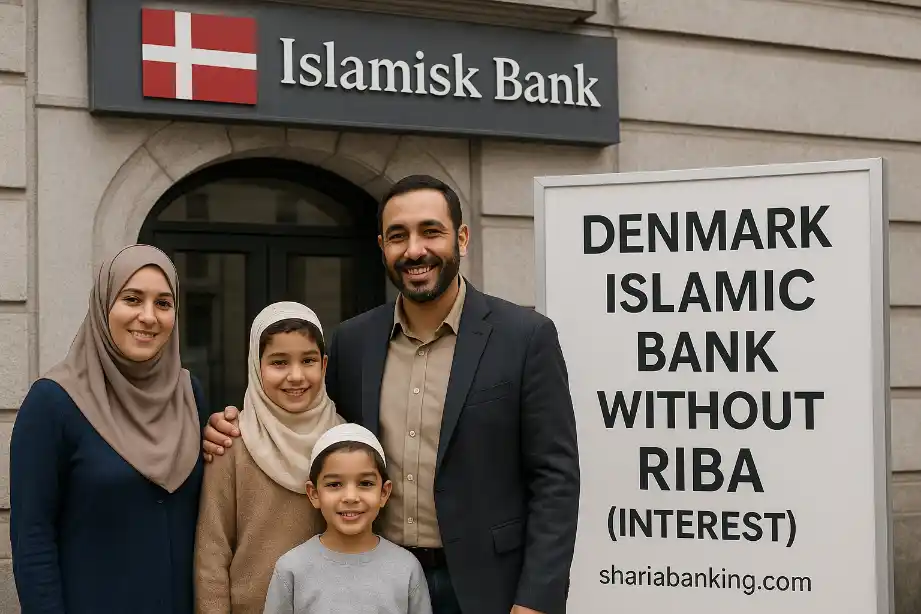
What is an Islamic Bank without interest in Denmark ?
In Denmark, an Islamic bank without riba (interest) would be a financial institution that operates entirely under Sharia principles, offering products and services free from conventional interest-based structures.
Halal banking solutions available for Muslims living in Denmark
Danish Muslims access Sharia-compliant banking primarily through three channels: cross-border European Islamic banks via EU passporting (KT Bank Germany, Al Rayan UK, Gatehouse Bank UK), online Islamic investment platforms (Wahed Invest), and ethical Danish cooperatives like Merkur Andelskasse offering values-aligned banking without specifically Sharia certification.
Distinctions between Sharia-compliant banking and traditional Danish banking
Sharia-compliant banking prohibits riba, gharar, and haram industries, mandating asset-backed transactions and profit-sharing, whereas traditional Danish banks like Danske Bank, Nordea, and Jyske Bank operate conventional interest-based lending, mortgage bonds tied to Nykredit’s realkreditobligationer market, and unrestricted investment universes including industries excluded under Islamic principles.
Opening Islamic bank accounts without interest in Denmark
Danish residents cannot open accounts at a domestic Islamic bank since none currently exists, but they can open Sharia-compliant accounts at KT Bank AG Germany under EU freedom-of-services passporting, regulated Wahed Invest investment accounts, or Al Rayan Bank UK accounts where post-Brexit residency criteria are met.
Halal financing products available through Islamic banking in Denmark
Available halal financing for Danish Muslims includes Murabaha consumer and vehicle finance via KT Bank Germany, Diminishing Musharaka home purchase plans through Gatehouse Bank UK and Al Rayan Bank UK, Shariah-screened investment portfolios at Wahed Invest, and Islamic gold and Sukuk allocations via European Islamic finance fintech platforms.
Home financing structures without riba in Denmark
Home financing structures without riba accessible to Danish residents primarily involve cross-border Diminishing Musharaka or Murabaha contracts originated in Germany or the United Kingdom, since Denmark’s specialised mortgage-bond realkreditsystem (Nykredit, Realkredit Danmark, Totalkredit) operates exclusively through interest-bearing covered bonds and lacks a domestic Sharia-compliant equivalent.
Regulation of Islamic banking services under Danish financial laws
Danish financial law administered by Finanstilsynet (DFSA) imposes no specific Islamic banking framework, instead permitting cross-border Sharia-compliant services through EU passporting under the Capital Requirements Directive, Markets in Financial Instruments Directive II (MiFID II), and the Danish Financial Business Act governing all licensed institutions operating domestically.
Alternatives for Muslims seeking ethical banking in Denmark
Danish Muslims seeking ethical banking explore Merkur Andelskasse (cooperative ethical bank since 1982, member-owned with sustainable-finance focus), GLS Bank Germany ethical accounts, family-financed Qard Hasan arrangements, community housing cooperatives, and Sharia-compliant fintech platforms (Wahed Invest, Niyah, Insha) operating cross-border under EU regulation.
Profitability mechanisms of Islamic institutions avoiding interest
Islamic institutions generate revenue through profit margins disclosed in Murabaha cost-plus sales, rental income from Ijarah leasing, profit-loss sharing from Musharaka and Mudarabah partnerships, advisory and asset-management fees, Sukuk coupon distributions, and Wakalah agency fees, replacing money-on-money interest with real-economy trade and service-based earnings.
Non-Muslim access to Islamic banking products in Denmark
Non-Muslim Danish residents may freely use Islamic banking products since Sharia-compliant accounts and investments impose no religious eligibility restriction, with many non-Muslim customers attracted by ethical screening, asset-backed structures resistant to 2008-style derivative crises, transparent profit disclosure, and exclusion of haram industries from underlying portfolios.
Advantages of choosing Islamic banking in Denmark
Advantages of Islamic banking for Danish customers include faith-aligned financial management for the country’s approximately 320,000 Muslims, ethical exclusion of alcohol, tobacco, weapons, and gambling sectors, fixed disclosed profit eliminating Danmarks Nationalbank rate-shock exposure, asset-backed transactions, and AAOIFI-aligned governance through independent Sharia Supervisory Boards.
Digital banking supporting halal finance growth in Denmark
Digital banking accelerates halal finance accessibility for Danish residents through Sharia-compliant neobanks (Nomo, Insha, Wahed Invest mobile platforms), MitID-compatible onboarding flows enabling cross-border European Islamic bank account opening, AAOIFI-certified blockchain Sukuk platforms, and AI-driven Sharia screening tools supporting halal stock and ETF selection across European exchanges.
Challenges Islamic banking faces in the Danish financial market
Islamic banking challenges in Denmark include absence of a dedicated domestic licence, dual regulation across Finanstilsynet and home-country regulators, language barriers since Danish documentation predominates, lack of mortgage tax-neutrality for Murabaha and Musharaka structures, limited local Sharia scholar accreditation, and modest Muslim market size compared with major European Islamic finance hubs.
Banks and institutions for Sharia-compliant banking accessible from Denmark
Although Denmark currently licenses no dedicated Islamic bank, Danish Muslims access Sharia-compliant services through cross-border European institutions operating under EU passporting, regulated Islamic fintech platforms, and historical Danish initiatives such as the pioneering Islamic Bank International of Denmark (IBID) and the now-discontinued Jutland-region Amanah Kredit programme.
Historical Danish initiatives (no longer operational)
Islamic Bank International of Denmark (IBID) — Founded in Copenhagen in 1982 as the first Islamic bank in Europe; pioneering Sharia-compliant institution; ceased operations decades ago; remains a historical landmark in European Islamic finance historyAmanah Kredit — Cooperative Sharia-compliant 30-year lease-to-own mortgage launched 2008 in the Jutland region by Sparekassen Farsø, Sparekassen Vendsyssel, Sparekassen Hobro, and Den Jyske Sparekasse; no longer offered; product reference: IslamicFinance.de archive.
Cross-border European Islamic banks accessible to Danish residents
Sharia-compliant fintech accessible from Denmark
Wahed Invest — Global Sharia-compliant robo-advisor; operates in 130 countries; regulated in the US (SEC) and UK (FCA); AAOIFI-aligned Shariah Supervisory Board; Islamic stock, Sukuk, gold, and real-estate fund portfolios; minimum investment USD 100.
Danish ethical alternatives (not Sharia-certified but values-aligned)
Merkur Andelskasse — Danish cooperative ethical bank founded 1982; supervised by Finanstilsynet (reference 13460); 30,000+ customers across Aalborg, Aarhus, and Copenhagen; excludes alcohol, weapons, fossil fuels, and gambling; sustainable-finance frontrunner but not Sharia-certified.
Danish regulator and reference institutions
Finanstilsynet (Danish Financial Supervisory Authority) — Denmark’s financial regulator authorising and supervising domestic and EU-passporting banks; oversees compliance with Danish Financial Business Act and EU prudential frameworks; reference authority for any future Islamic banking licence application.
Danmarks Nationalbank — Denmark’s central bank; sets monetary policy and supervises systemic stability; reference authority for any conventional Danish bank exploring Islamic windows; potential future facilitator of Sharia-compliant Realkredit innovation.
Murabaha and Musharaka in Danish Islamic finance solutions
Murabaha and Musharaka structures applied to Danish cases typically originate at KT Bank Germany or UK-based Islamic banks: Murabaha funds vehicle, equipment, and consumer purchases via cost-plus disclosed sale, while Diminishing Musharaka structures cross-border property co-ownership where the financier’s share is progressively bought out by the Danish resident.
Future of interest-free Islamic banking in Denmark
The future of interest-free banking in Denmark depends on regulatory accommodation by Finanstilsynet, potential Realkreditsystem reform to permit Sharia-compliant mortgage bonds, growing demand from 320,000+ Danish Muslims, fintech expansion via Wahed-type platforms, and possible emergence of Nordic Islamic windows as already explored by Scandinavian neighbours Sweden and Norway.