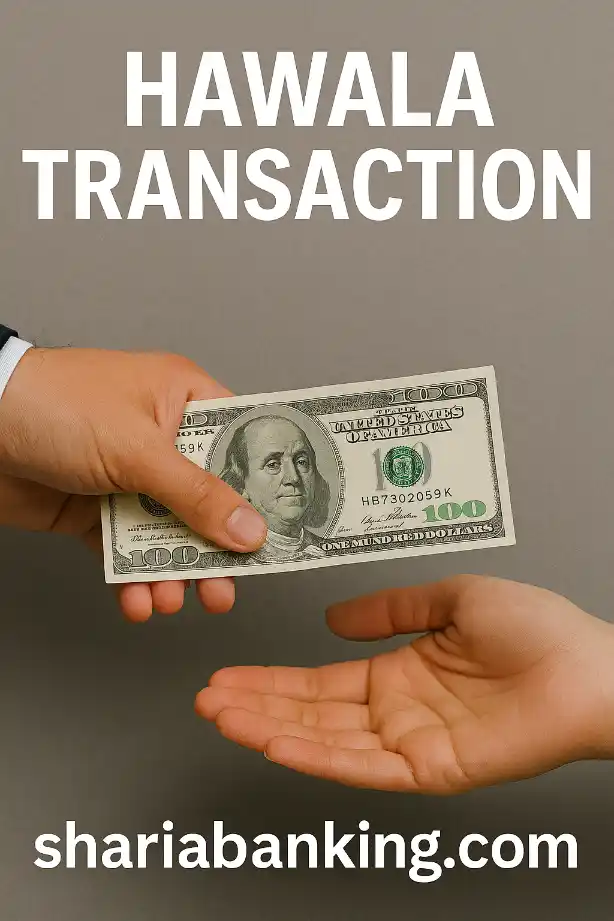
What is a Hawala transactions ?
Hawala is an informal system of transferring money or value without the physical movement of cash or the use of formal banking channels; It is based on trust and a network of intermediaries known as hawaladars.
Originating in South Asia and the Middle East centuries ago, hawala has been widely used by traders, migrants, and communities to remit funds quickly and often at lower costs compared to conventional banking systems.
Hawala transactions are known for being efficient, inexpensive, and accessible to people in regions with limited banking infrastructure; they operate on strong trust networks, often reinforced by family, clan, or long-term business relationships.
For many migrant workers, hawala is an attractive way to send remittances back home, as it avoids bureaucratic delays, currency restrictions, or high fees charged by formal financial institutions.
How does a Hawala transaction works ?
A Hawala transaction (also known as hundi in South Asia) is an informal money transfer system that operates outside traditional banks, and has existed for centuries, especially in the Middle East, South Asia, and North Africa. It’s built on trust and networks of brokers (hawaladars) rather than formal documentation.
Here’s how it typically works, step by step:
🔹 Example: Sending Money from London to Karachi
- Sender gives money to a local hawaladar (broker) in London
- You hand over, say, £1,000 to a hawaladar.
- He charges a small fee or takes a margin.
- Hawaladar contacts his counterpart in Karachi
- The London hawaladar communicates (by phone, WhatsApp, email, coded message, etc.) with a trusted partner hawaladar in Karachi.
- He tells him to pay the equivalent of £1,000 in Pakistani rupees to your recipient.
- Recipient receives money in Karachi
- The Karachi hawaladar pays the recipient in cash, often within hours, sometimes instantly.
- No physical transfer of money across borders happens at that moment.
- Settlement between hawaladars
- Later, the London hawaladar and Karachi hawaladar settle accounts between themselves.
- This settlement can happen in many ways:
- Reverse flows: Karachi hawaladar may have clients who want to send money to London, balancing the books.
- Trade goods: They may adjust through imports/exports (e.g., under- or over-invoicing shipments).
- Cash movement: Sometimes physical cash or bank transfers are eventually used, but often disguised.
🔹 Key Features
- Based on trust: Hawaladars usually work within family, community, or ethnic networks.
- No formal contracts: Transactions are recorded in simple codes, ledgers, or even just remembered.
- Fast & cheap: Often quicker and cheaper than banks, especially in rural areas with no banking.
- Anonymity: Often no formal ID checks; attractive for people without bank accounts, but also exploited for money laundering.
- Exchange rates: Often more favorable than banks, since hawaladars use parallel currency markets.